
Buccal fat removal · Bichectomy
Buccal fat removal: Compare practices from our network
Buccal fat removal takes out a pad of fat from the lower cheek to create more definition. It is permanent, and it cannot be undone.
Our network
Buccal fat removal providers from Adoreal's partner network.
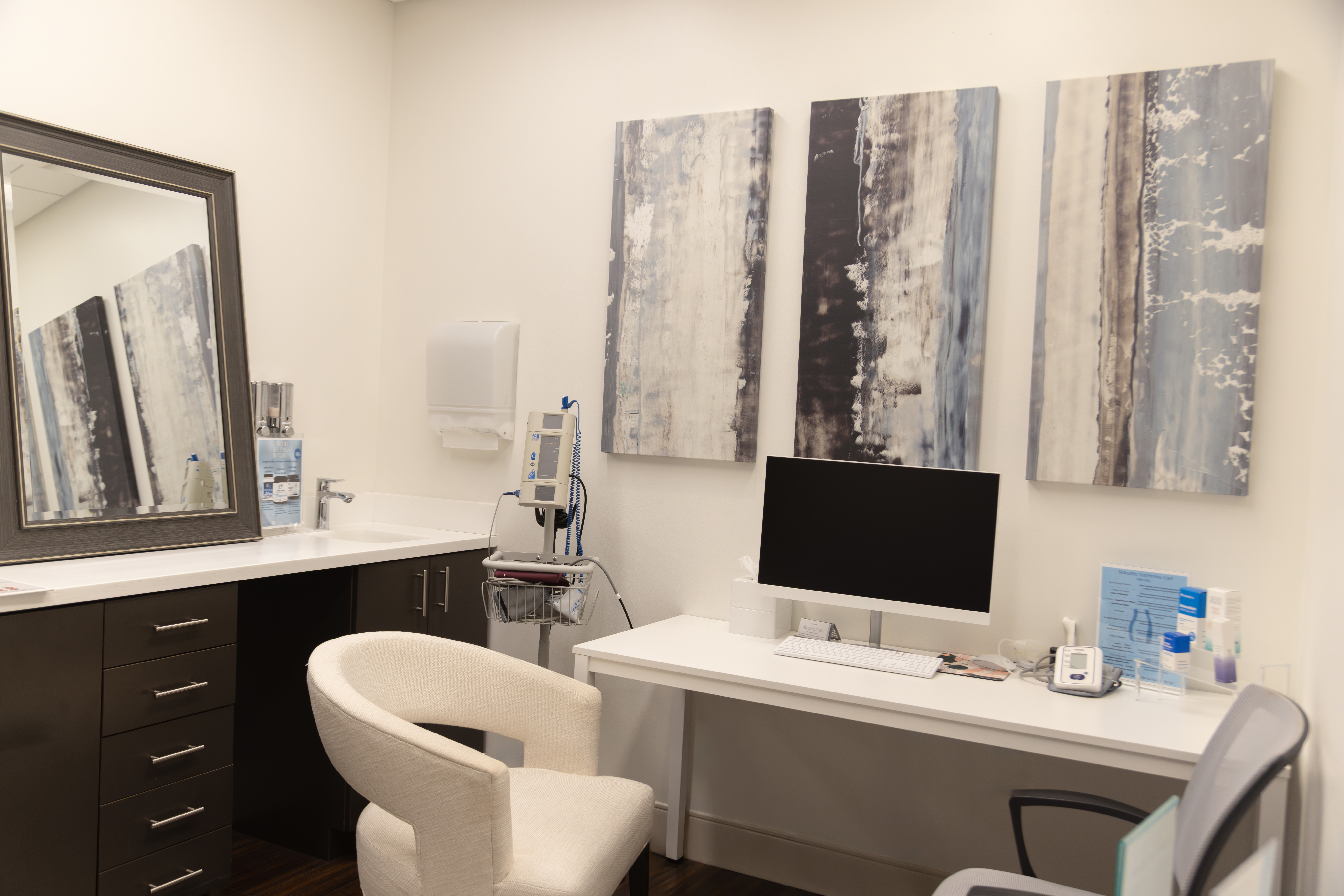
Baltimore, Maryland · United States
Belcara Health
Buccal fat removal performed by the practice's fellowship-trained facial plastic surgeon.
Baltimore, Maryland · United States
Belcara Health
Buccal fat removal performed by the practice's fellowship-trained facial plastic surgeon.
Ready to see who performs buccal fat removal near you?
Compare ProvidersDecision support
How to choose a buccal fat removal surgeon
Board certification is the starting point. The details below are worth weighing carefully when you're choosing the surgeon who's right for your goals.
Here's what to look for before you decide:
A good surgeon thinks about your face in twenty years.
Faces lose volume naturally with age, and removing fat now can accelerate a gaunt appearance later. A surgeon who raises this unprompted is considering the long term rather than the immediate change.
Conservative removal, always.
The buccal pad can be reduced, not perfectly measured. Removing too much creates a hollowed look that is very difficult to correct, usually requiring fat grafting. A surgeon who removes less is exercising judgment.
They should confirm the fullness is actually buccal fat.
Lower-face fullness can come from the buccal pad, from masseter muscle bulk, or from overall weight. Each needs a different approach, and one of them is not surgery. Expect the distinction to be made.
Willingness to decline is the strongest signal.
Younger patients with naturally full cheeks, or slim patients with little facial fat, are often poor candidates. A surgeon who declines these cases is demonstrating exactly the judgment you want.
Transparency about permanence is non-negotiable.
This is not reversible. Your surgeon should say so explicitly, document what will be removed, and set out what recovery and the final result realistically look like, in writing.
Before your consultation, prepare this question
“How will this look on my face at fifty, and would you advise against it for me?”
Faces hollow with age. A surgeon willing to say no, or to remove less than you asked for, is protecting you from a change you cannot reverse.
Find a Buccal Fat Removal ProviderAbout the treatment
About buccal fat removal
Buccal fat removal, sometimes called a bichectomy, removes part of the buccal fat pad in the lower cheek to create a more defined, sculpted appearance. It is a small operation with a permanent, irreversible effect.

What is buccal fat removal?
The buccal fat pad sits deep in the lower cheek, between the facial muscles. Removing part of it reduces lower-cheek fullness and can make the cheekbones and jawline read as more defined.
The treatment is performed through small incisions inside the mouth, so there is no external scar. The effect is permanent, and the fat cannot be replaced other than by grafting fat from elsewhere.
Who is a candidate
The treatment suits a fairly narrow group: people with genuine buccal fullness who are at a stable weight and have realistic expectations. Your surgeon may advise against it if you:
Are young, as facial fullness often reduces naturally with age
Are slim, with little facial fat to begin with
Have fullness caused by masseter muscle bulk rather than the fat pad
Have fullness that would resolve with overall weight change
Are seeking a look from images rather than a change suited to your anatomy
What it does not address
Lower-face fullness has several possible causes, and only one of them is buccal fat:
Masseter muscle bulk, which can be reduced with botulinum toxin rather than surgery.
Submental fat, under the chin, treated by liposuction or injectables.
Loose skin or jowling, which needs a lift rather than fat removal.
Overall weight, where the face reflects general body composition.
The treatment, step by step
01 Consultation. Your surgeon examines your face, confirms the fullness is buccal fat rather than muscle or general weight, and discusses whether the treatment suits your long-term facial aging.
02 Preparations. Medication adjustments and stopping smoking. Because incisions are inside the mouth, you will receive specific oral hygiene instructions.
03 Anesthesia. Frequently local anesthetic with sedation, as the treatment is short. General anesthesia may be used if combined with other surgery.
04 Removal. Small incisions inside the cheek allow the fat pad to be identified and a conservative portion removed. The treatment typically takes under an hour.
05 Closing. Dissolvable sutures close the intraoral incisions. There is no external scar.
Recovery and aftercare
Recovery is straightforward but the mouth needs care, since the incisions sit inside the cheek. Swelling initially masks the result entirely.
Expect swelling for one to two weeks, which can make cheeks look fuller at first
Follow oral rinse and hygiene instructions carefully
Eat soft foods for the first days and avoid very hot food and drink
Avoid strenuous activity for a week or two
Attend follow-ups so healing inside the mouth can be checked
Most people return to work within a few days. Because swelling resolves gradually and the change is subtle, final results are judged at three to six months.
Risks and considerations
The treatment is short but the effect is permanent, and that shapes its risk profile:
Over-removal, the most significant risk, producing a hollowed appearance that usually requires fat grafting to correct.
Accelerated hollowing with age, as faces naturally lose volume over time.
Asymmetry, if unequal amounts are removed or healing differs between sides.
Injury to nearby structures, uncommon, including the facial nerve or salivary duct.
Infection, uncommon, and a particular reason oral hygiene instructions matter.
Disappointment with a subtle result, as the change is often less dramatic than expected.
When to seek medical attention:
Fever, or increasing swelling, pain, or discharge inside the mouth
New numbness or weakness of the face
Difficulty opening the mouth that worsens rather than improves
Significant bleeding from an incision
Contact your surgeon's practice directly, or seek emergency care, if you experience any of the above.
When to seek medical attention
- Fever, or increasing swelling, pain, or discharge inside the mouth
- New numbness or weakness of the face
- Difficulty opening the mouth that worsens rather than improves
- Significant bleeding from an incision
Contact your surgeon’s practice directly, or seek emergency care, if you experience any of the above.
Common questions
Buccal fat removal questions, answered.
If your question isn't here, ask us directly. A real person answers, and we won't push you toward anything.
Talk to us →Is buccal fat removal reversible?
No. The fat is removed permanently. If too much is taken, correcting it usually requires grafting fat from elsewhere, which is a further treatment with its own uncertainty.
Will it make me look gaunt as I age?
It can. Faces lose volume naturally with age, so removing fat now may accelerate a hollowed appearance later. This is the main reason surgeons are conservative and sometimes decline.
Am I a good candidate?
A fairly narrow group is. Genuine buccal fullness, stable weight, and realistic expectations. Younger or slim patients are often better advised to wait or not proceed.
Is my fullness definitely buccal fat?
Not necessarily. It can come from masseter muscle bulk, submental fat, or overall weight, each needing a different approach. Your surgeon should establish the cause first.
Will there be a visible scar?
No. The incisions are made inside the mouth, so there is no external scar. That is also why oral hygiene during healing matters.
How long until I see the result?
Swelling makes cheeks look fuller for one to two weeks. The change emerges gradually, and final results are judged at three to six months.
How dramatic is the change?
Usually subtle. It refines the lower cheek rather than transforming the face, and patients expecting a dramatic change are often the ones who end up disappointed.
Can it be combined with other treatments?
Yes, sometimes with a facelift, chin augmentation, or fat transfer to the midface. Combining affects anesthesia and recovery, so discuss it at consultation.
What if I have too much removed?
Correction generally requires fat grafting, which is less predictable than the original removal. This is why choosing a conservative surgeon matters more here than almost anywhere.
Is there a non-surgical alternative?
Not for the fat pad itself. Where masseter bulk is the cause, botulinum toxin can help, and that is one reason establishing the cause first is so important.

Related treatments





More on buccal fat removal.
Article
How much is buccal fat removal in the UK?
Price variation depends on the surgeon's expertise, the complexity of the treatment, and the geographical location of the practice.
Article
Non-surgical buccal fat removal
Non-surgical methods generally provide subtler results than surgical removal and often require multiple sessions to achieve the desired outcome.
Article
Buccal fat removal and aging
While the effects are immediately visible, the long-term implications should be considered, especially as natural aging affects the skin and facial structure.