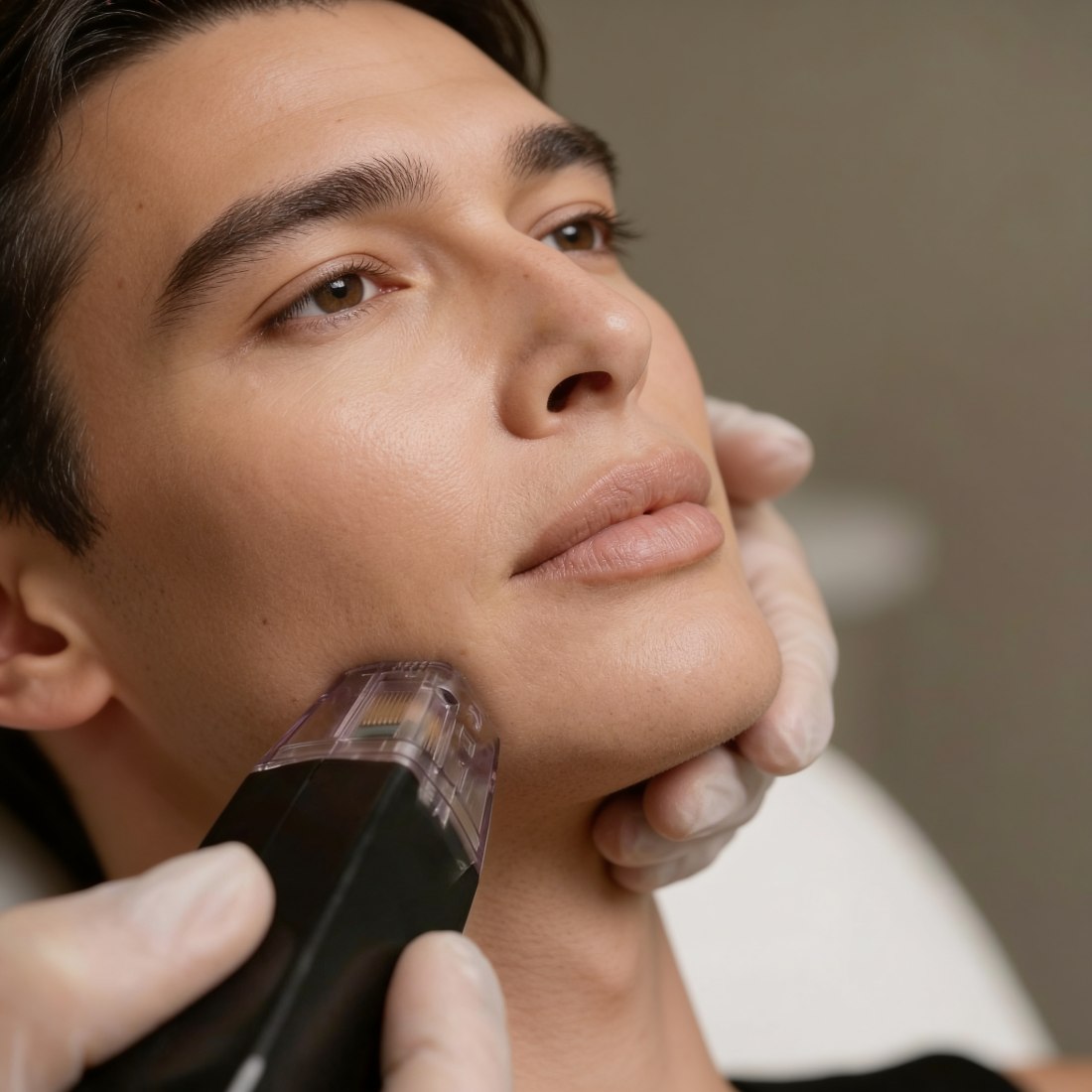
Laser skin resurfacing
Laser skin resurfacing: Compare providers from our network
Laser resurfacing renews damaged skin to soften lines, scars and sun damage. Lasers range from light treatments with days of downtime to deep resurfacing that takes weeks.
Our network
Laser skin resurfacing providers from Adoreal's partner network.
Irvine, California · United States
South Coast Plastic Surgery (SoCo)
Halo hybrid fractional resurfacing through the practice's medical spa, alongside PicoSure Pro, BBL and Morpheus8.
Irvine, California · United States
South Coast Plastic Surgery (SoCo)
Halo hybrid fractional resurfacing through the practice's medical spa, alongside PicoSure Pro, BBL and Morpheus8.
Ready to see who performs laser skin resurfacing near you?
Compare ProvidersDecision support
How to choose a laser resurfacing provider
Board certification is the starting point. The details below are worth weighing carefully when you're choosing the provider who's right for your goals.
Here's what to look for before you decide:
The laser should match your skin and your downtime.
A light fractional treatment and a deep ablative one are very different procedures. A provider who names the laser, explains why it suits your concern, and tells you the recovery that comes with it is being straight with you.
Your skin tone should shape the choice.
Deeper skin tones carry a greater risk of darker patches, and not every laser suits every skin. A provider who assesses your skin type and adjusts the laser and settings is working safely.
Ask who performs it, and who supervises.
Laser resurfacing can be dangerous in inexperienced hands. Ask about the operator's training on this specific laser, and who oversees the treatment if it is not the doctor.
Expect a plan for before and after.
Skin preparation for deeper treatments, sun protection beforehand, antivirals if you get cold sores, and clear aftercare are signs of a careful practice.
Get honest numbers.
One or two treatments are typical, with results building over months and pinkness that can take weeks or longer to fade. A provider who says so upfront is setting expectations you can trust.
Before your consultation, prepare this question
“Which laser do you recommend for my skin, how deep will you go, and what downtime should I plan for?”
The laser and its depth decide both result and recovery. A provider who matches them to your skin tone, not just your goal, is working safely.
Find a Laser Skin Resurfacing ProviderAbout the treatment
About laser skin resurfacing
Laser skin resurfacing uses concentrated beams of light to remove or heat damaged skin in a precise, controlled way. As the skin heals, it produces new collagen, and the new skin that forms is smoother and firmer.
How it works
Lasers differ in how deep they go. Ablative lasers, such as CO2 and erbium, remove the outer layer of skin and give the most dramatic results with the longest recovery. Non-ablative lasers heat deeper layers without breaking the surface. Fractional lasers treat thousands of tiny columns of skin and leave the skin between them intact, which means a shorter recovery than resurfacing the whole surface. Hybrid lasers such as HALO combine ablative and non-ablative wavelengths in one treatment.
Resurfacing is used for fine lines and wrinkles, acne and other scars, sun damage, brown spots, uneven tone and texture, and enlarged pores, mainly on the face but also on the neck, chest and hands.
What to expect from results
Results depend on the laser, the depth and your skin:
- Improvement often shows within a week and continues for months, for up to a year
- Many people need one or two treatments; lighter treatments may be repeated as a series
- Deeper ablative treatments give bigger change with longer recovery
- Results can last years with sun protection, but lines return as the skin ages
- Maintenance treatments once or twice a year are common
Skin tone and laser choice
Skin tone is a key safety variable. People with deeper skin tones have a greater risk of healing with darker patches, and some lasers are not recommended for very dark skin. Some practices say newer hybrid lasers, with customised settings, can treat a wider range of skin tones; ask what experience your provider has with yours.
In the wrong or inexperienced hands, laser resurfacing can be dangerous. Choose a provider with specific experience of the laser they recommend, and if a nurse or technician performs the treatment, ask who supervises it.
Before, during and after
Consultation. Your provider assesses your skin and tone and recommends a laser, a depth and the downtime that comes with it.
Preparation. A skin-prep routine for deeper treatments, sun protection for at least four weeks before, and antivirals if you get cold sores.
Treatment. Numbing cream and eye shields, then the laser handpiece is guided over the area. Usually 30 to 60 minutes.
Aftercare. Gentle cleansing and ointment as instructed, no picking, head raised, and daily sunscreen.
Course and review. Many people need one or two treatments; lighter treatments may be repeated as a series about a month apart.
Who it suits
Laser resurfacing suits many people with sun damage, lines, scars or uneven texture, but the right laser depends heavily on your skin. It may be less suitable, or need a different laser, if you:
- Have active acne
- Have taken isotretinoin for acne in the past year
- Take medication that makes your skin sensitive to light
- Have an active cold sore or healing wounds on the face
- Have a deeper skin tone, which changes which laser and settings are safe
- Are tanned, or cannot avoid the sun before and after treatment
- Have loose or sagging skin, which resurfacing will not lift
Risks and side effects
Most side effects are temporary, but laser resurfacing can be dangerous in inexperienced hands:
- Redness, swelling and peeling. Expected, lasting from days to a couple of weeks depending on depth.
- Prolonged redness. Pinkness usually fades over two to three months, but can take up to a year.
- Pigment changes. Darkening of treated skin, more likely in deeper skin tones; lightening is rarer.
- Cold sore flare. A risk around the mouth if you have had cold sores; antiviral medication can prevent it.
- Acne flares, milia and infection. Breakouts, small white bumps or bacterial infection during healing, each treatable.
- Burns or scarring. Uncommon, and more likely if crusts are picked or the wrong settings are used.
Common questions
Laser skin resurfacing questions, answered.
If your question isn't here, ask us directly. A real person answers, and we won't push you toward anything.
Talk to us →What is the difference between ablative, non-ablative and hybrid lasers?
Ablative lasers such as CO2 and erbium remove the outer layer of skin; they give the biggest change and the longest recovery. Non-ablative lasers heat deeper layers without breaking the surface. Hybrid lasers combine both in one treatment, aiming for strong results with less downtime.
What are HALO and Contour TRL?
Both are lasers used by our partner practices. HALO is a hybrid fractional laser that treats the surface and deeper layers in one pass; HALO Tribrid adds a third wavelength. Contour TRL is an erbium laser for deeper resurfacing that removes the entire top layer of skin.
Does it hurt?
Numbing cream is applied first, and most people feel warmth or prickling. Deeper resurfacing can be painful, which is why local anesthetic, sedation or general anesthesia may be used.
What is the downtime?
It depends on the laser. Hybrid fractional treatments typically mean about a week of redness, swelling and flaking. Deep ablative resurfacing means two to four weeks, with redness that can last longer.
How many treatments will I need?
Many people reach their goal with one or two treatments. A series of gentler treatments, spaced about a month apart, is an option if you want less downtime each time.
When will I see results?
Often within a week, as peeling finishes. Improvement continues for months as collagen builds, and can keep developing for up to a year.
How long do results last?
Years, with daily sun protection and good skincare. The skin keeps aging, so lines gradually return, and many people have maintenance treatments once or twice a year.
Is it suitable for darker skin tones?
Sometimes, with the right laser and settings. Deeper skin tones carry a greater risk of darker patches, and some lasers are not recommended for very dark skin. Ask about your provider's experience with your skin type.
Is laser resurfacing better than a chemical peel?
Neither is better for everyone. Both remove damaged outer skin to prompt renewal; lasers give very precise control of depth, while peels may suit some concerns, such as older acne scars, as well or better. Your skin and downtime decide.
Can it replace a facelift?
No. Laser resurfacing can improve texture, lines and mild laxity, but it does not lift loose or sagging skin.