
Rhinoplasty · Nose reshaping
Rhinoplasty: Compare practices from our network
Rhinoplasty reshapes the nose, and can also improve breathing. It is the most technically demanding treatment in facial surgery.
Our network
Rhinoplasty providers from Adoreal's partner network.
London · United Kingdom
N1 Plastic Surgery
Rhinoplasty and nose reshaping within a Harley Street practice covering the full facial spectrum.
London · United Kingdom
N1 Plastic Surgery
Rhinoplasty and nose reshaping within a Harley Street practice covering the full facial spectrum.
Ready to see who performs rhinoplasty near you?
Compare ProvidersDecision support
How to choose a rhinoplasty surgeon
Board certification is the starting point. The details below are worth weighing carefully when you're choosing the surgeon who's right for your goals.
Here's what to look for before you decide:
Volume in this one operation matters more than general experience.
A surgeon who performs rhinoplasty weekly develops judgment that cannot be acquired doing a handful a year. Ask how many they do annually and what proportion of their practice it represents. This is the one treatment where being a generalist is a genuine disadvantage.
A good surgeon assesses your breathing, not just your profile.
The nose is an airway before it is a feature. Septal deviation, valve collapse, and turbinate size all affect how you breathe and how the nose behaves after surgery. A surgeon who examines inside your nose before discussing shape is treating the whole structure.
They should show you simulations, then explain their limits.
Morphing software and 3D imaging help align expectations, but cartilage does not always behave as software predicts. A surgeon who shows you an image and then explains honestly what may not be achievable is more trustworthy than one who promises the render.
Revision policy tells you how a surgeon thinks about risk.
Rhinoplasty has the highest revision rate in aesthetic surgery, often quoted between five and fifteen percent even in expert hands. Ask what happens if a small refinement is needed at a year, and who bears the cost. The answer reveals a great deal.
Ethnic and structural preservation should be part of the conversation.
A well-planned rhinoplasty keeps your nose in proportion with your face and consistent with your heritage. If the plan is a generic small, straight nose regardless of who is sitting in the chair, that is a reason to seek another opinion.
Before your consultation, prepare this question
“How many rhinoplasties do you perform a year, and what is your revision rate?”
Surgeons who specialize in noses answer this without hesitation. Vagueness here is one of the most telling signals in the whole conversation.
Find a Rhinoplasty ProviderAbout the treatment
About rhinoplasty
Rhinoplasty reshapes the nose to improve its appearance, its function, or both. Because the nose sits at the center of the face, small changes have a marked effect on facial balance, which is why planning is as important as surgical technique.
What is rhinoplasty?
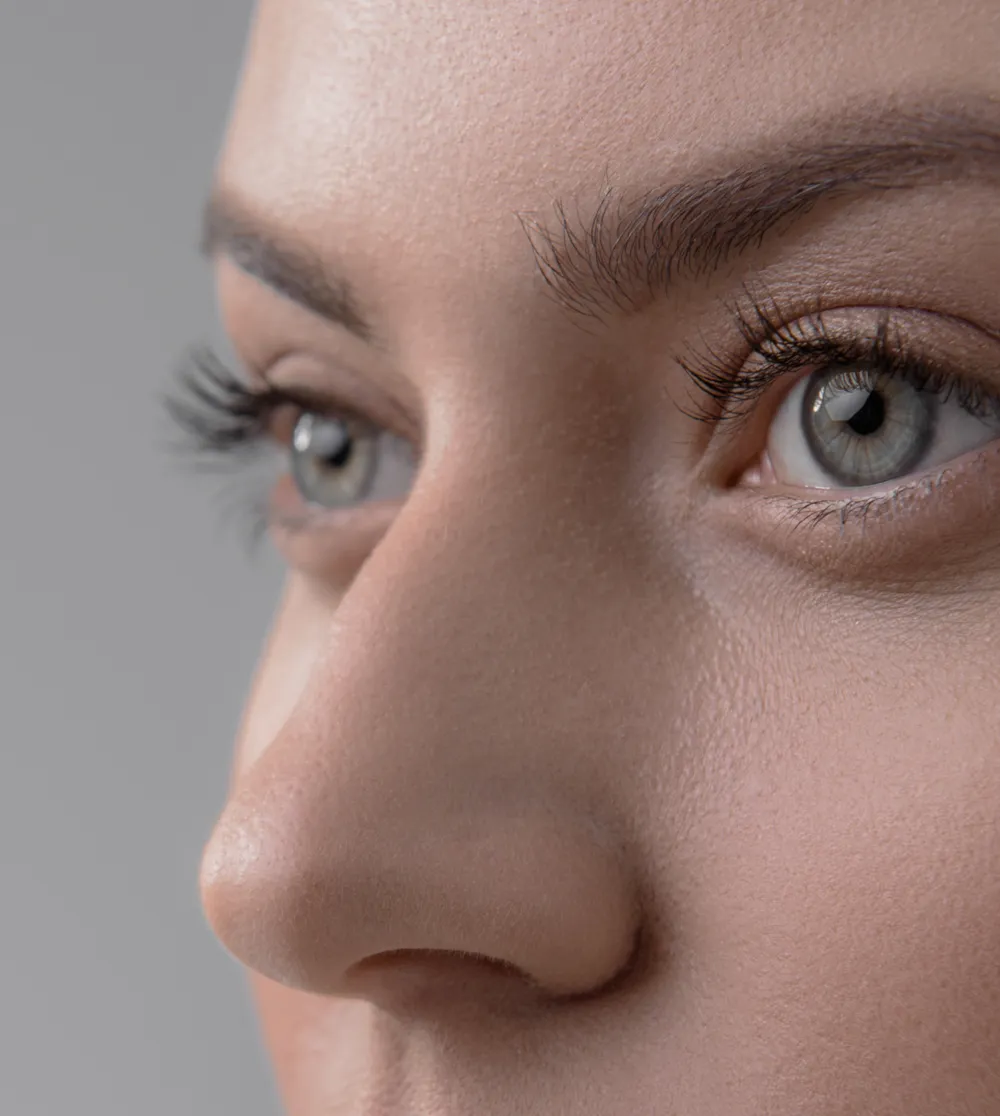
Rhinoplasty, sometimes called a nose job, reshapes the bone and cartilage that give the nose its structure. It can reduce or increase size, refine the tip, straighten the bridge, narrow the nostrils, or change the angle between the nose and upper lip.
Functional rhinoplasty addresses breathing problems, and the two are often combined in a single operation. Your surgeon will assess both aspects at consultation.
Open or closed technique
There are two main surgical approaches, and the right one depends on how much structural work is needed:
Closed rhinoplasty places all incisions inside the nostrils, leaving no external scar. Suited to more modest changes.
Open rhinoplasty adds a small incision across the columella, the strip of skin between the nostrils, giving the surgeon direct access for complex reshaping. The scar is typically well hidden once healed.
Your surgeon should explain which they recommend for your anatomy and why, rather than defaulting to one approach for every patient.
Are you a candidate?
Rhinoplasty suits people in good general health who are troubled by the shape of their nose or by difficulty breathing through it. Your surgeon may advise waiting or reconsidering if you:
Are still growing, as facial development is usually complete in the late teens
Smoke, which significantly impairs healing of the nasal skin
Have unrealistic expectations of what surgery can change
Have a condition affecting healing or blood clotting
Are seeking surgery to satisfy someone else rather than yourself
The treatment, step by step
01 Consultation and planning. Your surgeon examines the outside and inside of your nose, assesses skin thickness and cartilage strength, and discusses what is realistic. Photographs and sometimes simulation software help align expectations.
02 Preparations. You may need to stop certain medications and supplements that affect bleeding, and stop smoking well in advance. Arrangements for a week of visible swelling at home are worth making.
03 Anesthesia. Usually general anesthesia, though some limited treatments can be performed under sedation with local anesthetic.
04 Reshaping. Through internal or columellar incisions, bone and cartilage are reduced, augmented, or repositioned. Cartilage grafts, often taken from the septum, may be used to support and define the new shape.
05 Functional correction. Where breathing is affected, a deviated septum can be straightened and the internal airway opened at the same time.
06 Closing and support. Incisions are closed with fine sutures. Internal splints or soft packing and an external splint or tape support the new shape while early healing takes place.
Recovery and aftercare
The first week is the most restrictive, with swelling, bruising around the eyes, and congestion that makes breathing through the nose difficult. Splints are usually removed within a week to ten days.
Sleep with your head elevated and avoid knocking or resting anything on the nose
Avoid strenuous exercise and anything risking impact for several weeks
Expect most visible bruising to settle within two weeks
Wear sunscreen, as healing nasal skin is sensitive to sun
Attend follow-ups so healing and shape can be monitored
Most people feel presentable at two to three weeks. Subtle swelling in the tip can take a full year or longer to resolve, which is why final results are judged at twelve months rather than at three.
Risks and side effects
Rhinoplasty is generally safe in experienced hands, but it carries specific risks you should understand:
Need for revision surgery, more common than in other aesthetic treatments, sometimes for small residual irregularities.
Breathing difficulty, if internal structures heal in a way that narrows the airway.
Asymmetry, as no nose and no face is perfectly symmetrical to begin with.
Changes in skin sensation or numbness at the tip, usually temporary.
Persistent swelling, particularly in thicker skin, which can take a year to settle.
Infection, bleeding, or reaction to anesthesia, uncommon but possible with any surgery.
When to seek medical attention
Heavy or persistent nosebleeding that does not settle with pressure
Fever, or increasing redness, swelling, or discharge suggesting infection
Sudden change in vision or severe headache
Difficulty breathing that worsens rather than improves
Contact your surgeon's practice directly, or seek emergency care, if you experience any of the above.
When to seek medical attention
- Heavy or persistent nosebleeding that does not settle with pressure
- Fever, or increasing redness, swelling, or discharge suggesting infection
- Sudden change in vision or severe headache
- Difficulty breathing that worsens rather than improves
Contact your surgeon’s practice directly, or seek emergency care, if you experience any of the above.
Common questions
Rhinoplasty questions, answered.
If your question isn't here, ask us directly. A real person answers, and we won't push you toward anything.
Talk to us →How long until I look normal again?
Most visible bruising settles within two weeks and the splint comes off within ten days. Many people feel presentable at two to three weeks, though fine swelling in the tip can continue to resolve for up to a year.
When will I see the final result?
Judge your result at twelve months. Thicker skin can take longer. Surgeons are cautious about revision inside the first year precisely because the nose is still changing.
Open or closed rhinoplasty, which is better?
Neither is universally better. Closed leaves no external scar and suits more modest changes; open gives direct access for complex reshaping. What matters is that your surgeon chooses based on your anatomy.
Will it help my breathing?
It can. Where a deviated septum or narrowed airway is contributing, functional correction is often done in the same operation. Ask your surgeon to examine inside your nose, not just assess the profile.
What is the revision rate?
Rhinoplasty has the highest revision rate in aesthetic surgery, commonly quoted between five and fifteen percent even in expert hands. Ask your surgeon for their own figure and their policy if a refinement is needed.
Will there be a visible scar?
Closed rhinoplasty leaves no external scar. Open rhinoplasty leaves a small scar across the columella between the nostrils, which typically fades to be barely noticeable.
Can I keep my nose looking like mine?
Yes, and a good surgeon will insist on it. Preserving proportion with your face and consistency with your heritage should be part of the plan, not an afterthought.
Is non-surgical rhinoplasty an alternative?
Filler can camouflage a small dorsal bump or improve tip projection temporarily, with no downtime. It cannot reduce size, narrow the nose, or improve breathing, and it is not a substitute for surgery.
What age is appropriate?
Facial growth is generally complete in the late teens, and most surgeons prefer to wait until then. Functional surgery for breathing problems is sometimes considered earlier.
Can it be combined with other treatments?
Yes, commonly with chin augmentation to improve profile balance, or with septoplasty for breathing. Combining affects anesthesia time and recovery, so discuss it at consultation.

Related treatments



More on rhinoplasty.

Article
How painful is rhinoplasty?
This discomfort is typically described more as a feeling of pressure or congestion rather than sharp pain. The intensity decreases after the first few days.
Article
How long does rhinoplasty last?
The nose, like any other part of the body, will naturally change as part of the aging process. Minor changes over time are natural.

Article
How to prepare for rhinoplasty
Using Adoreal gives you a tailored plan for preparations directly on the platform, customized to suit your treatment.