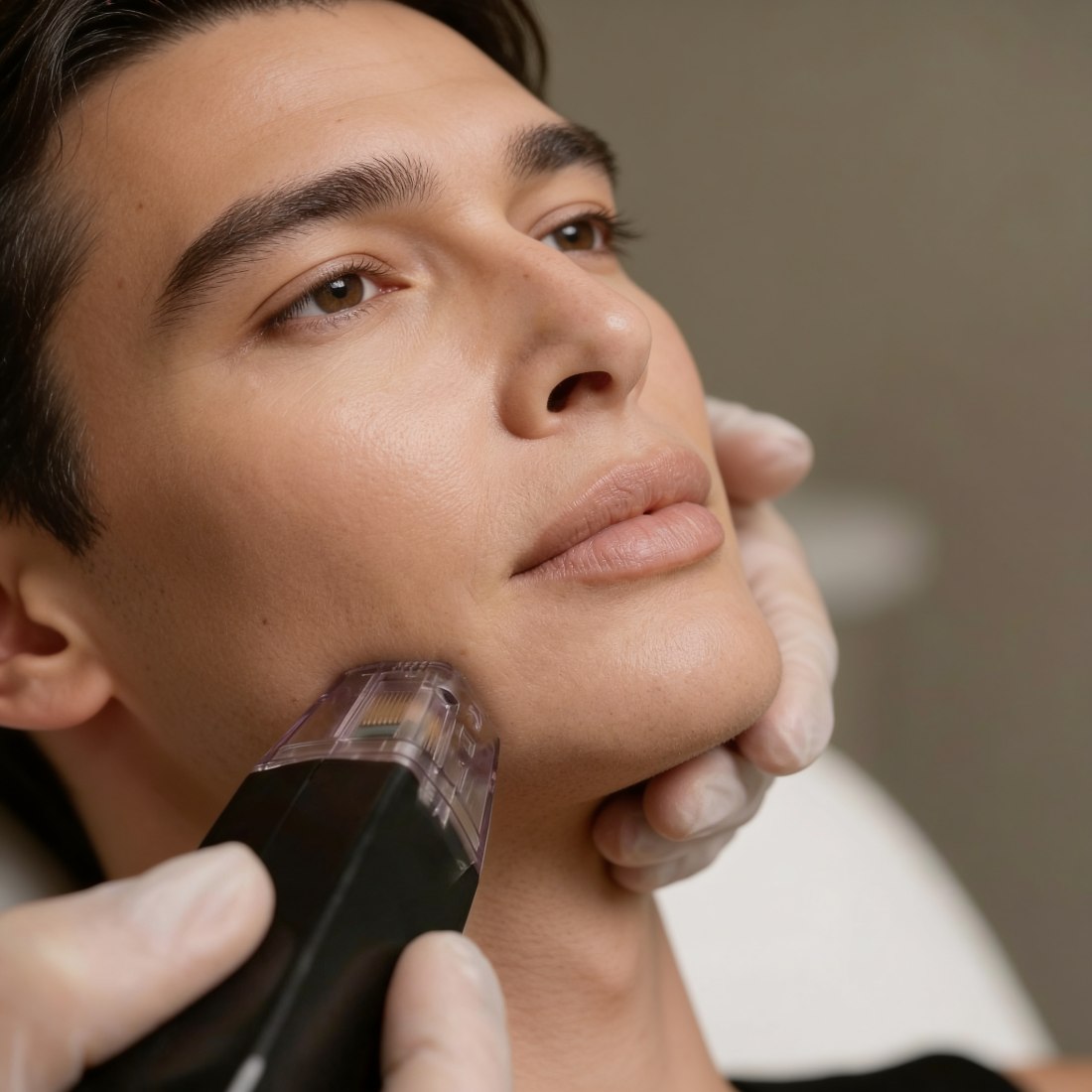
Thread lift · PDO threads
Thread lift: Compare providers from our network
A thread lift uses absorbable threads under the skin to give a subtle lift and stimulate collagen. It is aimed at early signs of ageing, and the result is temporary.
Our network
Thread lift (PDO threads) providers from Adoreal's partner network.

Malmö · Sweden
Reformkliniken
PDO treatment to stimulate collagen and improve firmness, carried out by a team of plastic surgeons and licensed nurses.
Malmö · Sweden
Reformkliniken
PDO treatment to stimulate collagen and improve firmness, carried out by a team of plastic surgeons and licensed nurses.
Ready to see who performs thread lift (PDO threads) near you?
Compare ProvidersDecision support
How to choose a thread lift provider
Board certification is the starting point. The details below are worth weighing carefully when you're choosing the provider who's right for your goals.
Here's what to look for before you decide:
The person placing the threads should be medically qualified.
A thread lift is a procedure under the skin, with risks such as infection and thread extrusion. Ask who will perform it, what their medical qualification is and how many thread lifts they do.
You should be assessed, not sold a package.
A good practitioner evaluates your anatomy before recommending threads, and tells you if another treatment would suit you better.
A good provider is clear about how long it lasts.
Results usually last 6 to 12 months. A provider who says so upfront is setting expectations you can trust.
Ask how complications are handled.
Ask what happens if a thread works its way out, the result is uneven or the area becomes infected, and who you contact after hours.
Ask which threads will be used.
Ask what the threads are made of, how many will be placed and where, so you understand what is going under your skin.
Before your consultation, prepare this question
“Am I a good candidate for threads, or would another treatment suit my face better?”
Threads suit early to moderate signs of ageing. A provider who assesses your skin and is willing to say no is one worth trusting.
Find a Thread lift (PDO threads) ProviderAbout the treatment
About thread lift (PDO threads)
PDO threads are made of polydioxanone, a biocompatible material the body breaks down over time. That is why the effect is temporary: the threads are not meant to stay.
A thread lift sits between injectables and surgery. It can soften early jowls, mild sagging and wrinkles without the downtime or scarring of a facelift, but it works on a smaller scale.
How it works
A thread lift places absorbable threads, or sutures, beneath the skin of the face or neck through small entry points rather than incisions. Barbed threads lift tissue mechanically where they sit, and the threads also stimulate collagen, which gradually improves firmness.
What to expect from results
Some lift is visible straight away. The result becomes clearer as swelling and bruising settle, and firmness improves gradually over several weeks as collagen builds.
- Results usually last 6 to 12 months, depending on your skin and lifestyle
- The lift is subtle and suits early to moderate signs of ageing
- It does not remove skin, so more advanced sagging is beyond what threads can do
Threads and expectations
Threads lift tissue where they are placed and encourage new collagen, but the effect is subtle and temporary, usually lasting 6 to 12 months. It is aimed at early to moderate signs of ageing in skin that still has good elasticity.
Where skin is looser, a facelift or neck lift works on a different scale. A practitioner who assesses your anatomy should tell you honestly which group you are in.
Before, during and after
Consultation. A practitioner evaluates your anatomy, listens to your goals and decides with you whether you are a candidate for a thread lift, or whether another treatment would suit you better.
Preparation. You will usually be asked to avoid alcohol, strong skincare products and, if your doctor agrees, blood-thinning medicines for a few days beforehand.
Treatment. Local anesthesia is usually used, sometimes with a numbing cream. The threads are passed beneath the skin through small entry points; there are no real incisions, and most of the time passing the threads causes little or no pain. Cold compresses may be applied afterwards.
Aftercare. Initial healing can bring swelling, bruising, irritation and discomfort, controlled with medication, cold compresses and ointment. You may be asked to use antibiotic ointment around the entry points, which are usually invisible after a few days. Protect your skin carefully from the sun, including dark sunglasses, until healing is complete, and follow your practitioner's specific aftercare instructions.
Who it suits
A thread lift generally suits men and women with early to moderate signs of ageing, such as early jowls, mild sagging or wrinkles, who still have good skin elasticity and want a subtle result without surgery. A practitioner should assess your anatomy and goals before suggesting it. It may be less suitable if you:
- Have more advanced sagging or loose skin, which threads are not designed to lift
- Take blood-thinning medication; talk to your doctor before any change, never stop it on your own
- Want a permanent result
- Cannot protect your skin from the sun while it heals
Risks and side effects
Swelling and bruising are common. Less common risks are worth understanding before you consent.
- Swelling, bruising and redness. Common in the first days, along with some irritation.
- Pain or discomfort. Usually mild and controlled with medication, but it can occasionally persist.
- Difficulty opening the mouth. Possible after treatment, and usually temporary.
- Thread extrusion. A thread can work its way out through the skin; contact your provider if you notice one.
- Infection. Possible at the entry points; antibiotic ointment may be advised.
- Unfavourable result. The lift may be less than hoped, or not what you expected.
Common questions
Thread lift (PDO threads) questions, answered.
If your question isn't here, ask us directly. A real person answers, and we won't push you toward anything.
Talk to us →What is a thread lift?
A minimally invasive procedure that uses absorbable, barbed threads under the skin to lift tissue and stimulate collagen in the face and neck.
What are PDO threads?
Threads made of polydioxanone (PDO), a biocompatible material the body breaks down over time, which is why the result is temporary.
Does it hurt?
Local anesthesia is usually used, and passing the threads typically causes little or no pain. Some swelling and tenderness afterwards is normal.
How long do results last?
Usually 6 to 12 months, depending on your skin and lifestyle.
Is there downtime?
There is less downtime than with surgery, and many people return to daily activities quickly. Expect some swelling and bruising, and protect your skin from the sun until healing is complete.
Will there be scars?
There are no real incisions, only small entry points for the threads, which are usually invisible after a few days.
Is a thread lift the same as a facelift?
No. A facelift is surgery that can address loose skin on a larger scale. A thread lift gives a subtler, temporary lift for earlier signs of ageing.
What are the risks?
Swelling and bruising are common. Other risks include infection, a thread working its way out, pain that can persist, temporary difficulty opening the mouth, sensitivity to light and a result you are not happy with.
How should I prepare?
You will usually be asked to avoid alcohol and strong skincare products for a few days beforehand. If you take blood-thinning medication, ask your doctor before changing anything.