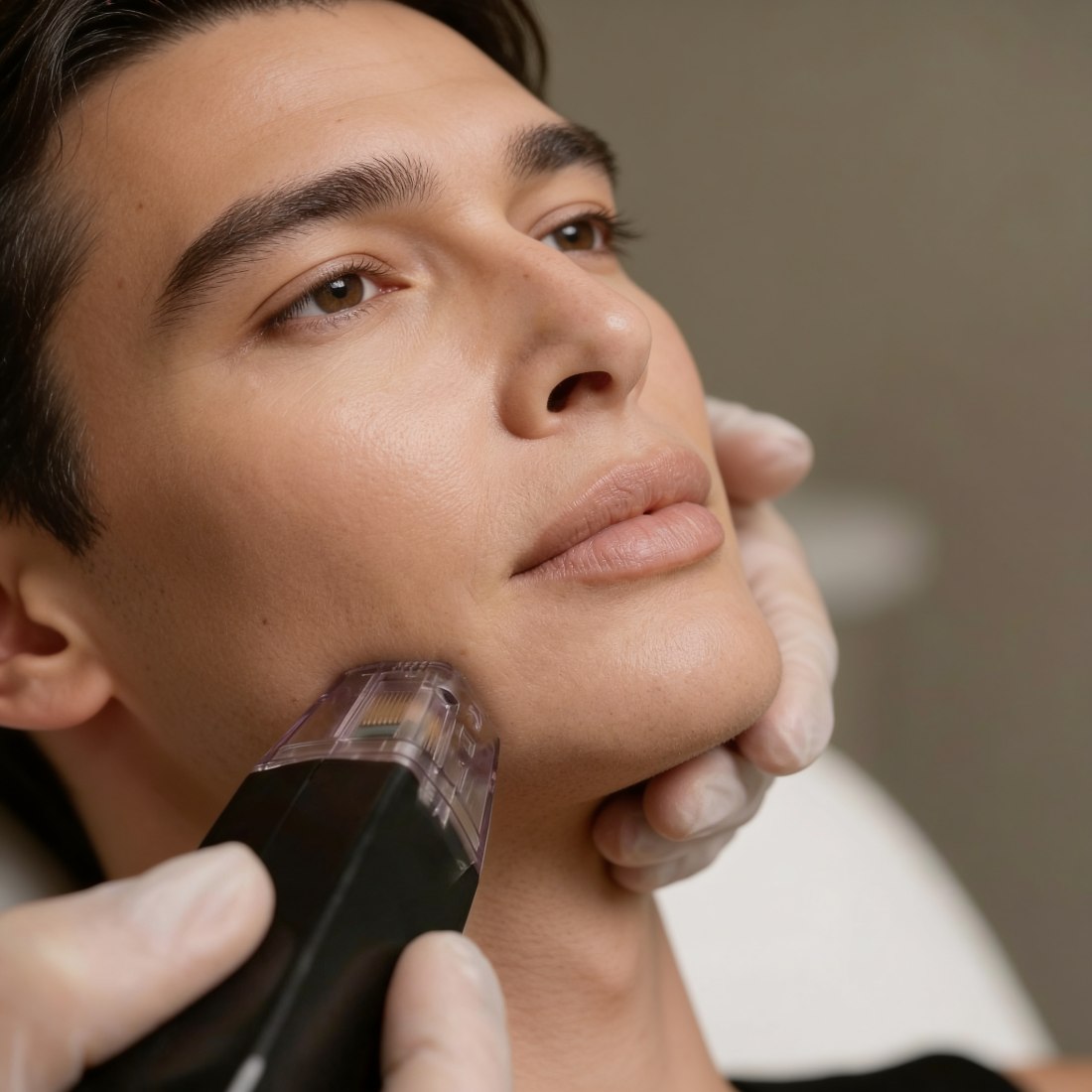
Excessive sweating · Hyperhidrosis
Excessive sweating treatment: Compare providers from our network
Treatment for excessive sweating aims to bring sweating that disrupts daily life back under control, most often in the underarms. Options range from injections that wear off to miraDry for the underarms.
Our network
Excessive sweating treatment providers from Adoreal's partner network.

Malmö · Sweden
Reformkliniken
Hyperhidrosis treatment with injections, offered alongside the practice's injectables and surgical range.
Malmö · Sweden
Reformkliniken
Hyperhidrosis treatment with injections, offered alongside the practice's injectables and surgical range.
Ready to see who performs excessive sweating treatment near you?
Compare ProvidersDecision support
How to choose a provider for excessive sweating treatment
Board certification is the starting point. The details below are worth weighing carefully when you're choosing the provider who's right for your goals.
Here's what to look for before you decide:
A good provider rules out other causes first.
Sweating can be a side effect of medicine or a sign of another condition. A provider who asks when it started, where it happens and what else you have noticed, and refers you on when needed, is treating you rather than a symptom.
They should ask what you have already tried.
Stronger antiperspirants, prescription creams or tablets, and iontophoresis are usual first steps. A provider who knows where in-clinic treatment fits, and says so when a simpler option is worth trying, is being straight with you.
The treatment should match where you sweat.
miraDry treats the underarms only. Injections can be used more widely, but some areas, such as the palms, are more uncomfortable to treat. Ask what is realistic for the areas that bother you.
Be clear on how long it lasts.
Injections wear off and are typically repeated around every six months; miraDry is intended to be long-lasting but sometimes needs a second session. Knowing this upfront lets you compare the real commitment, not just the first appointment.
Ask who treats you and how side effects are followed up.
Injections should be given by a qualified medical professional. Ask about their training, how side effects such as muscle weakness or numbness are handled, and whether a review appointment is included.
Before your consultation, prepare this question
“Could anything else be causing my sweating, and which option fits the areas that bother me most?”
A provider who checks for other causes and matches the treatment to where you sweat is assessing you, not selling a session.
Find a Excessive sweating treatment ProviderAbout the treatment
About excessive sweating treatment
Treatment usually starts with stronger antiperspirants and moves on when those are not enough. The in-clinic options covered here are botulinum toxin injections, which block the nerve signals that switch sweat glands on, and miraDry, which uses controlled heat to destroy sweat glands in the underarms.
Most excessive sweating has no underlying cause, and it often runs in families. Sweating that is new, affects the whole body, or comes with other symptoms needs a medical assessment first.
What is hyperhidrosis?
Hyperhidrosis means sweating more than your body needs to regulate its temperature. There is no fixed threshold: sweating counts as excessive when it gets in the way of daily life. It most often affects the underarms, palms and soles of the feet, and can also affect the face and groin.
When there is no underlying cause, it is called primary hyperhidrosis: the sweat glands are overactive, it often runs in families, and stress can make it worse without being the cause. Secondary hyperhidrosis is caused by an illness, hormonal change or medicine, and more often affects the whole body. It is treated by addressing that cause.
What to expect
Medical check. Excessive sweating can be a side effect of medication or a sign of another condition. Your provider should ask when it started, where it happens and about your general health, and refer you on if anything needs investigating.
Consultation. A discussion of which areas bother you, what you have already tried, and whether injections, miraDry or another approach fits. For miraDry, the treatment area is mapped on the skin beforehand.
Injections. A fine needle places small amounts of botulinum toxin just under the skin across the sweating area. Several injection points are usually needed.
miraDry. After a local anesthetic, a handheld device delivers controlled heat beneath the skin to the sweat glands while cooling the surface. An appointment usually takes 60 to 90 minutes, including numbing and mapping.
Injections. Most people go straight back to normal activities. The effect builds from about a week after treatment and is complete within around a month.
miraDry. Most people return to work and daily activities the same day. Mild swelling or tenderness usually settles within a few days, and some people notice temporary numbness or tingling in the underarm or upper arm for a few weeks.
Review. Your provider should explain when to come back, whether for repeat injections or, if needed, a second miraDry session.
Results and duration
Injections reduce sweating in the treated area for a period of months. The effect typically lasts up to around six months before treatment is repeated, and it varies between people and areas.
miraDry is designed to give a long-lasting reduction in underarm sweating, because sweat glands that are destroyed do not grow back. Most people need one session; people with severe sweating may have a second around three months later. The underarms hold less than 2 percent of the body's sweat glands, so treating them does not affect your ability to cool down.
Neither treatment changes sweating elsewhere on the body. Treated underarms may also have less odor, and miraDry can leave underarm hair finer and sparser.
Who it suits
In-clinic treatment is generally considered when sweating disrupts daily life and stronger antiperspirants have not helped enough. It may not be suitable, or may need to wait, if you:
- Have sweating that is new, affects your whole body, or comes with night sweats, fever, weight loss or palpitations, which should be investigated first
- Are pregnant or breastfeeding, when botulinum toxin is not recommended
- Have certain neuromuscular conditions
- Mainly sweat from your hands, feet or face, if you are considering miraDry, which is designed for the underarms
- Take a medicine that may be causing the sweating, which is worth reviewing with your doctor first
Risks and side effects
Both treatments are generally well tolerated when carried out by a qualified medical professional, but side effects can occur.
- Discomfort or irritation. At the injection sites, settling within days.
- Temporary muscle weakness. Nearby muscles can be weakened for a while after injections; this wears off.
- Compensatory sweating. Some people notice more sweating in other areas after injections.
- Flu-like symptoms or back and neck pain. Reported occasionally after injections.
- Swelling and tenderness. Common after miraDry, and usually settles within a few days.
- Numbness or tingling. In the underarm or upper arm after miraDry, typically resolving within weeks.
Tell your provider about your full medical history, including pregnancy, breastfeeding, neuromuscular conditions and the medicines you take.
When to see a doctor first
Some sweating needs a medical check, not a treatment
Contact your doctor before considering any in-clinic treatment if your sweating:
- Started recently or affects your whole body
- Happens at night
- Comes with fatigue, weight loss, palpitations or a long-lasting fever
- Began after you started a new medicine
These can point to an underlying cause that needs its own treatment.
Common questions
Excessive sweating treatment questions, answered.
If your question isn't here, ask us directly. A real person answers, and we won't push you toward anything.
Talk to us →Is excessive sweating a medical condition?
Yes. Hyperhidrosis is a recognized and common condition. There is no fixed threshold: sweating counts as excessive when it disrupts your daily life. In most cases there is no underlying cause, and it often runs in families.
Should I see a doctor first?
If your sweating is new, affects your whole body, happens at night, or comes with symptoms such as weight loss, fatigue or fever, yes. Some medicines and conditions cause sweating, and those need their own treatment.
How long do injections last?
Typically up to around six months, after which treatment can be repeated. The effect starts after about a week and is complete within about a month.
Is miraDry permanent?
It is designed to be long-lasting, because the sweat glands it destroys do not grow back. Most people have one session; people with severe sweating may have a second around three months later. Results vary, and it treats the underarms only.
Will I sweat more somewhere else?
Some people notice more sweating in other areas after injections, which is a recognized side effect. The underarms hold less than 2 percent of the body's sweat glands, so treating them does not stop your body cooling itself.
Can my hands and feet be treated?
Some providers use injections on the hands and feet, although US approval is for underarm sweating, and treating the palms usually needs effective pain relief. miraDry is designed for the underarms only. Iontophoresis is another option for the hands and feet.
Does it hurt?
Injections involve a series of small needle pricks, and numbing options vary by area and practice. miraDry is done under local anesthetic, and you may feel swelling and tenderness for a few days afterwards.
Can I get this through public healthcare?
It depends where you live. In the UK, the NHS notes that injections for underarm sweating may not be available on the NHS. In Sweden, public care mainly treats severe hand sweating, usually after a referral and after other treatments have been tried, so many people go to a private clinic.
Can I have injections while pregnant or breastfeeding?
No. Botulinum toxin is not recommended during pregnancy or breastfeeding. Tell your provider if either applies, or if you are trying to conceive.
Will I still need deodorant?
After miraDry, many people find they no longer need it every day, though you can still use it if you like. Injections reduce sweating in the treated area for as long as the effect lasts.