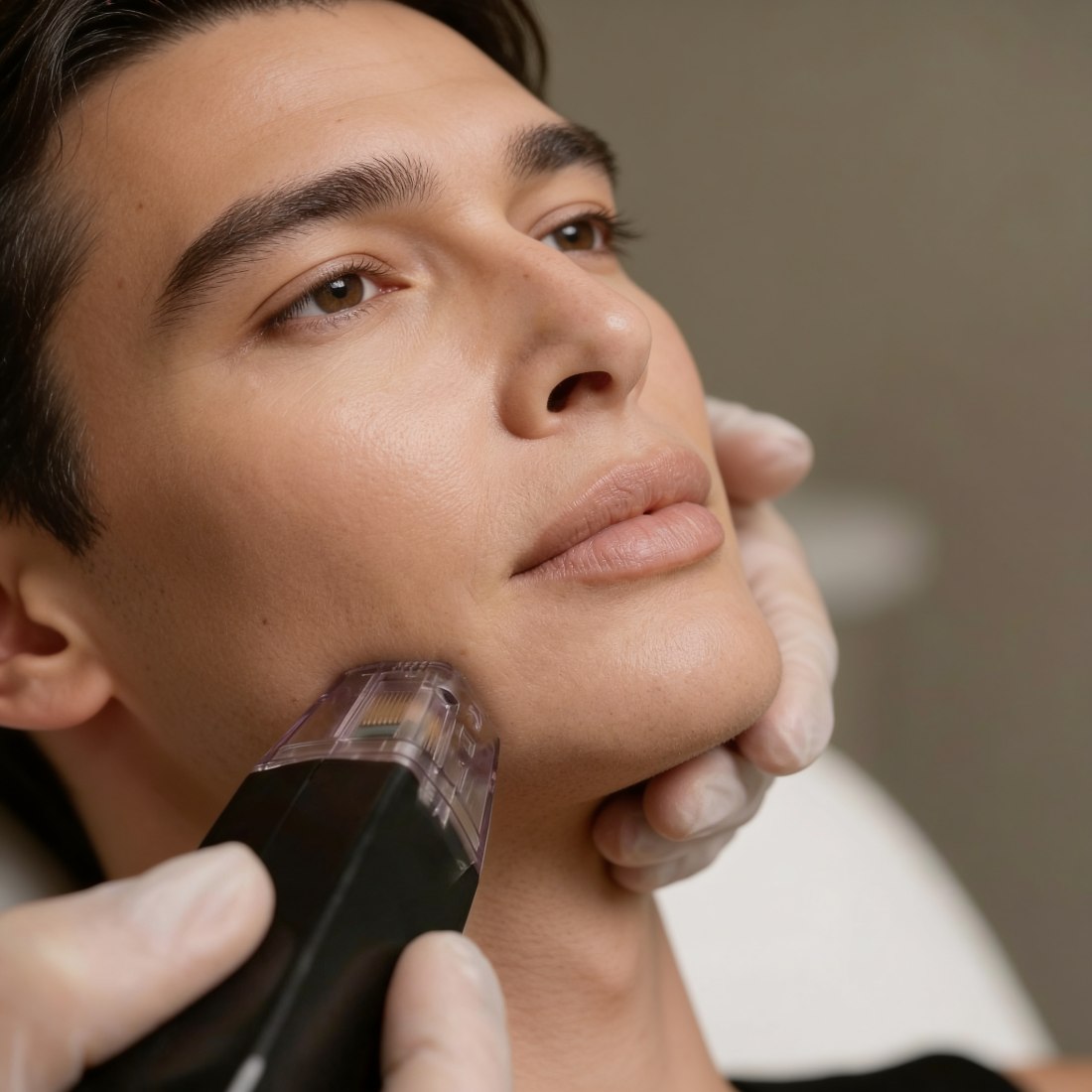
IPL photofacial · Broadband light (BBL)
IPL photofacial: Compare providers from our network
An IPL photofacial uses pulses of light to fade sun spots and calm redness. It is a short course of sessions, and sun protection decides how long results last.
Our network
IPL photofacial (BBL) providers from Adoreal's partner network.
Irvine, California · United States
South Coast Plastic Surgery (SoCo)
Broadband light (BBL) for sun damage and redness on the face, neck, chest and hands, within the practice's medical spa.
Irvine, California · United States
South Coast Plastic Surgery (SoCo)
Broadband light (BBL) for sun damage and redness on the face, neck, chest and hands, within the practice's medical spa.
Ready to see who performs IPL photofacial (BBL) near you?
Compare ProvidersDecision support
How to choose an IPL provider
Board certification is the starting point. The details below are worth weighing carefully when you're choosing the provider who's right for your goals.
Here's what to look for before you decide:
The device and settings must match your skin.
IPL and BBL target pigment, so the wrong settings on deeper or tanned skin raise the risk of burns and discolouration. A provider who assesses your skin type, names the device and offers a test spot is working safely.
Any spot should be checked before it is treated.
IPL is for sun spots, freckles and redness, not for moles or a spot that has changed. A provider who asks a doctor to look at an uncertain spot first is protecting you: treating an undiagnosed spot with light or laser can delay a diagnosis.
A good provider talks about sun protection before results.
Sun exposure brings spots back and raises the risk of pigment problems after treatment. A provider who sets out the aftercare before booking a course is setting expectations you can trust.
Expect a plan, not a single session.
Most people need a short course and maintenance after it. Ask how many sessions you are likely to need and how often upkeep is recommended, so you know the full commitment.
Ask who operates the device and what their training is.
Results and safety depend on the operator's assessment and settings. Ask about their qualification, their training on that specific device and their experience with your skin type.
Before your consultation, prepare this question
“Is IPL safe for my skin type, and will you do a test spot first?”
Skin tone is the key safety variable. A provider who can name the device, explain why it suits your skin and offer a test spot is working carefully.
Find a IPL photofacial (BBL) ProviderAbout the treatment
About IPL photofacial (BBL)
BBL (BroadBand Light) is a newer generation of IPL made by Sciton, with settings that can be adjusted during treatment. Practices describe it as more precise and more comfortable than older IPL devices.
The heat also prompts some new collagen, which can gradually improve texture. The main job of IPL, though, is colour: sun spots, freckles, uneven tone, redness and small visible vessels.
How it works
An IPL photofacial uses intense pulsed light: quick flashes of broad-spectrum light delivered through a handpiece. The light is absorbed by excess pigment and by blood in small surface vessels, so one treatment can target brown spots and redness together.
What to expect from results
Improvement usually shows within one to three weeks, as treated spots flake away and redness fades, and builds across the course. The best result is often seen around three months after the last session.
- A course is typically one to five sessions, about four weeks apart, depending on the device and your skin
- Maintenance is commonly suggested every 6 to 12 months, or a new short series once a year
- Sun exposure brings spots and freckles back, so daily sun protection decides how long results last
Skin tone and safety
IPL targets pigment, so deeper or tanned skin absorbs more of the light. That makes skin tone the key safety question, and practices in our network draw the line differently: from Fitzpatrick skin types I to IV, to I to V with a newer device, to no IPL on dark or tanned skin at all.
Ask which device will be used, why it suits your skin, and whether a test spot is done first.
Before, during and after
Consultation. Your provider looks at your skin type, the spots or redness you want treated and any recent sun exposure, and agrees with you which areas to treat. A test spot may be offered, particularly for deeper skin tones.
Preparation. Arrive without a tan or self-tan on the area. You may be asked to pause retinoids and strong exfoliants around treatment; your provider will tell you for how long.
Treatment. The skin is cleansed, your eyes are shielded and a cool gel is applied. The handpiece releases quick flashes of light as it moves over the skin; most people describe a warm snap, like a rubber band. A session takes from about 10 minutes to under an hour, depending on the device and the areas treated.
Aftercare. Skin may look red, slightly puffy and warm, like mild sunburn, for a short while. Brown spots darken, then flake away over one to two weeks. Makeup can usually go on the same day or the next morning. Avoid heavy sweating for 24 to 48 hours, stay out of the sun and use SPF 30 or higher every day.
Who it suits
IPL generally suits people with sun damage, brown spots or facial redness on skin that is light to medium in tone and not currently tanned. Your provider decides with you whether it is the right device for your skin. It may be less suitable if you:
- Have a deeper skin tone, where light-based treatment carries a higher risk of discolouration
- Have a tan, recent sun exposure or self-tan on the area
- Cannot avoid the sun in the weeks after treatment
- Have a mole or a spot that has changed and has not been checked by a doctor
- Are pregnant, or take medication that makes your skin more sensitive to light
Risks and side effects
Side effects are usually mild and short-lived when the device is set correctly for your skin.
- Redness, swelling and warmth. Common straight after treatment, often like a mild sunburn, and usually settling within hours to a day or two.
- Darkening of treated spots. Expected. Pigment rises and darkens, then flakes away over one to two weeks.
- Pigment changes. Darker or lighter patches are uncommon but possible, more likely in deeper or tanned skin and with sun exposure after treatment.
- Blistering. Possible, and a reason to contact your provider. Makeup should wait until the skin has healed.
- Eye injury. The light is bright enough to harm the eyes, which is why shields or protective eyewear stay on throughout.
Common questions
IPL photofacial (BBL) questions, answered.
If your question isn't here, ask us directly. A real person answers, and we won't push you toward anything.
Talk to us →Is IPL the same as BBL?
BBL (BroadBand Light) is a newer generation of IPL. Practices say its filters and pulse settings make it more precise and more comfortable than older IPL devices, but both use pulses of broad-spectrum light to treat pigment and redness.
How many sessions will I need?
Typically one to five, about four weeks apart, depending on the device, your skin and what is being treated. Maintenance is often suggested every 6 to 12 months.
Does it hurt?
Most people describe a warm snap, like a rubber band. Devices have cooling built in, and a topical numbing cream can be used if needed.
Is there downtime?
Little to none. Skin can look red or slightly sunburned for a short while, and most people return to work the same day. Avoid heavy sweating for 24 to 48 hours and stay out of the sun.
Why did my spots get darker after treatment?
That is expected. Treated pigment darkens and rises to the surface, then flakes away over one to two weeks.
How long do results last?
With careful sun protection and maintenance sessions, improvement can last for years. Sun exposure brings old spots and freckles back.
Can I have IPL if I have darker skin?
It depends on your skin type and the device. Practices draw the line in different places, and some do not treat darker or tanned skin with IPL at all. Ask for an assessment and a test spot, and ask about alternatives.
Can IPL help with rosacea?
Practices list facial redness, visible vessels and rosacea flare-ups among the things IPL and BBL can reduce. Talk to your doctor about any ongoing rosacea care alongside it.
Which areas can be treated?
The face is the most common, followed by the neck, chest and hands. Arms, shoulders and legs can also be treated.