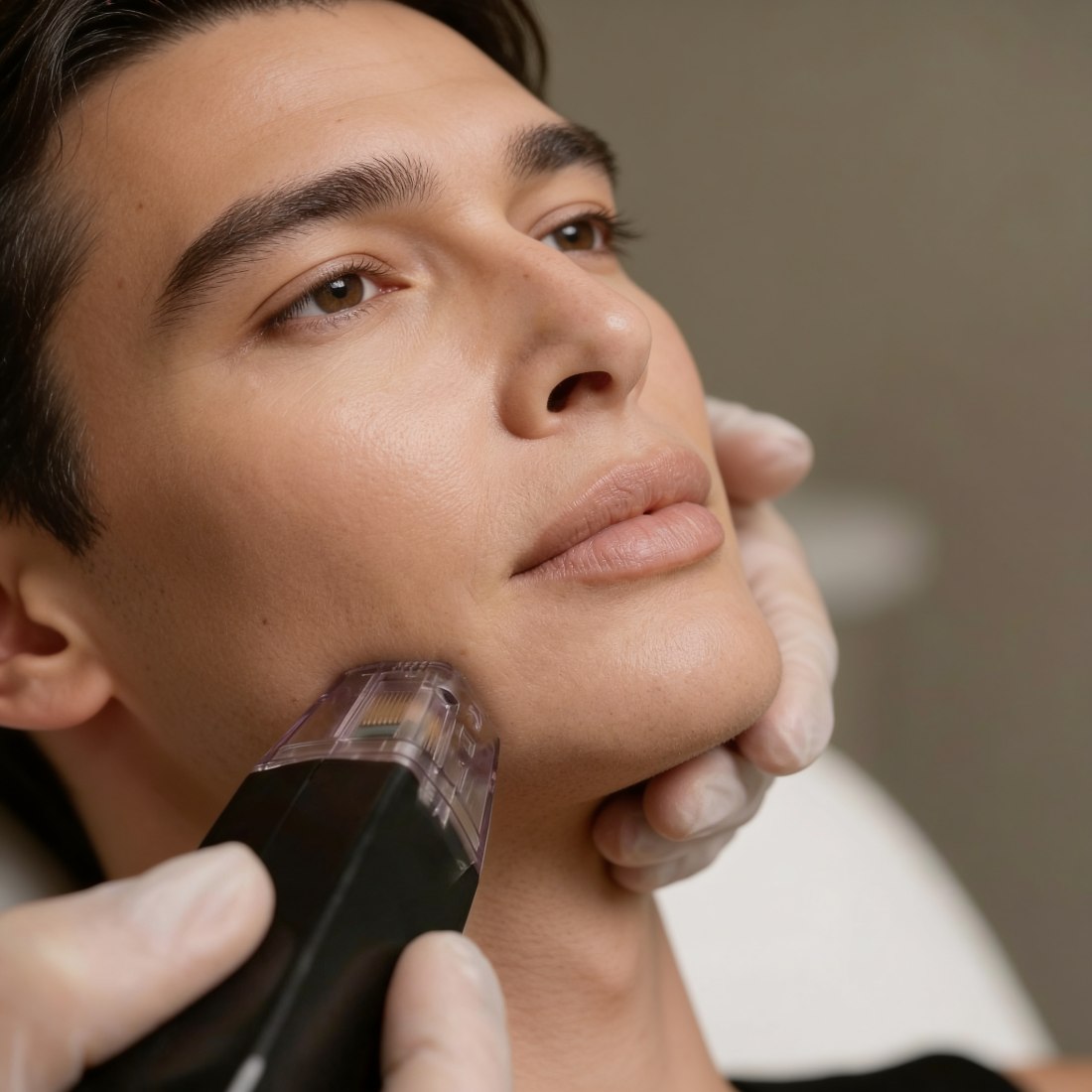
Microneedling · Collagen induction
Microneedling: Compare providers from our network
Microneedling uses fine needles to prompt the skin to renew itself, softening fine lines and scars and refining texture over a course of sessions.
Our network
Microneedling providers from Adoreal's partner network.

Malmö · Sweden
Reformkliniken
Microneedling on its own or combined with exosomes or a gentle chemical peel, planned after a skin analysis.
Malmö · Sweden
Reformkliniken
Microneedling on its own or combined with exosomes or a gentle chemical peel, planned after a skin analysis.
Ready to see who performs microneedling near you?
Compare ProvidersDecision support
How to choose a microneedling provider
Board certification is the starting point. The details below are worth weighing carefully when you're choosing the provider who's right for your goals.
Here's what to look for before you decide:
A new needle cartridge for every session is non-negotiable.
The FDA advises asking whether a new cartridge is used for each patient and each session, and how the device is cleaned between patients. A provider who answers this without hesitation is working safely.
Ask who performs it and how they were trained.
The FDA recommends a provider trained in microneedling. Ask about their qualification, their experience with the device, and with your skin type.
Ask which device is used, and what it is authorized for.
Devices differ in how they move the needles and control depth. A provider who names the device and explains why it suits your concern is being transparent with you.
If PRP is offered, ask how it is prepared and used.
PRP is made from a small sample of your own blood. The FDA notes that microneedling devices are not approved for delivering blood products such as PRP into the skin, so it is reasonable to ask how and why it is used in your plan.
Expect a course, not a quick fix.
Three to six sessions about four weeks apart is typical, with results building over months. A provider who says so before selling a package is setting expectations you can trust.
Before your consultation, prepare this question
“Which device do you use, and is a new needle cartridge opened for every session?”
Microneedling breaks the skin, so hygiene comes first. A provider who opens a new cartridge for you, and can name the device, is working safely.
Find a Microneedling ProviderAbout the treatment
About microneedling
Microneedling, sometimes called collagen induction therapy, uses ultra-fine needles to create thousands of microscopic channels in the skin. These tiny, controlled injuries trigger the skin's own repair process, which produces new collagen and elastin.
How it works
The needles usually sit in a pen-shaped device that the provider passes over the skin. As the skin rebuilds over the following weeks, fine lines soften, scars become less noticeable, and tone and texture improve. Because it uses no heat, it is often offered to people for whom a laser is not a good fit.
Microneedling is used for fine lines, acne scars, enlarged pores, uneven texture and stretch marks, on the face and on the body. It is often combined with PRP (platelet-rich plasma), prepared from a small sample of your own blood, or with gentle chemical peels.
What to expect from results
Microneedling rewards patience more than most treatments:
- A subtle glow can show within a week; firmer, smoother skin builds over about three months
- A course of three to six sessions is typical, about four weeks apart
- Deep wrinkles, advanced sun damage, stretch marks and scars may need six or more
- Results can last many months, and periodic maintenance helps preserve them
- It refines skin quality; it does not lift sagging skin
Hygiene and safety
Microneedling breaks the skin, so hygiene is the key safety variable. The US Food and Drug Administration (FDA) advises asking how the device is cleaned between patients and whether a new needle cartridge is used for each patient and each session. Re-using a cartridge is unsafe, even if it has been cleaned.
The FDA also advises choosing a provider trained in microneedling and asking about their experience. In the US it has authorized microneedling devices for facial acne scars, facial wrinkles and abdominal scars in adults aged 22 and over; ask your provider what the device they use is authorized for.
Before, during and after
Consultation. A skin analysis and a talk about your goals, leading to a plan that may combine microneedling with PRP or a peel.
Preparation. Share your medications, skin conditions and history of cold sores or keloids, and avoid tanning beforehand.
Treatment. Numbing cream where needed, then the device is passed over the area. Sessions take 30 to 60 minutes.
Aftercare. Redness like a mild sunburn for one to three days. Avoid heavy sweating and heat for 48 hours, and use sunscreen.
Course and review. Sessions about four weeks apart, with your plan adjusted as the skin responds.
Who it suits
Microneedling suits many skin types and concerns, but it is a medical procedure and not right for everyone. It is less suitable if you:
- Have an active skin infection or a current cold sore outbreak
- Have taken isotretinoin for acne in the past six months
- Have a bleeding disorder or take blood thinners
- Have eczema, psoriasis, vitiligo or an autoimmune condition
- Have a history of keloid scarring
- Are immunosuppressed or have poorly controlled diabetes
- Are tanned, or plan significant sun exposure in the two weeks after treatment
Risks and side effects
Side effects are usually mild and short-lived when the treatment is done by a trained provider with sterile equipment:
- Redness and tightness. Like a mild sunburn, usually fading within one to three days.
- Dryness, flaking or itching. Common for a few days as the skin recovers.
- Pinpoint bleeding and bruising. Pinpoint bleeding during treatment is common; bruising is possible.
- Stinging. Some products may sting when applied to freshly treated skin.
- Pigment changes. Darkening or lightening of the skin. Less common, and worth discussing if you have a deeper skin tone.
- Infection. Rare when aftercare is followed and a new, sterile needle cartridge is used.
Common questions
Microneedling questions, answered.
If your question isn't here, ask us directly. A real person answers, and we won't push you toward anything.
Talk to us →How does microneedling work?
Fine needles create tiny, controlled injuries in the skin. The skin responds by producing new collagen and elastin, which smooths and firms it gradually.
What is microneedling with PRP?
PRP is platelet-rich plasma, prepared by drawing a small amount of your blood and spinning it to separate the platelets. It is applied to the skin during and after microneedling. Practices offer it to support healing; the FDA notes that microneedling devices are not approved for delivering PRP into the skin, so ask how your provider uses it.
How many sessions will I need?
Typically three to six, about four weeks apart. Deep wrinkles, advanced sun damage, stretch marks and scars may need six or more.
Does it hurt?
Numbing cream is used where needed, and most people describe light scratching or vibration rather than pain. Sensitive areas can be more uncomfortable.
What is the downtime?
Short. Redness like a mild sunburn usually fades within one to three days, with some dryness or flaking. Most people return to normal activities the next day.
When will I see results?
A subtle glow can appear within a week, while firmer, smoother skin develops over about three months as collagen matures.
How long do results last?
Many months. Periodic maintenance sessions and good skincare, including daily sunscreen, help preserve them.
Is it suitable for darker skin tones?
Our partner practices consider it suitable for most skin types because it uses no heat, and offer it where lasers are not appropriate. The FDA notes a risk of darkening or lightening in darker skin, and that some devices were not studied in darker skin types, so ask about your provider's experience.
Can it be combined with other treatments?
Often, yes. Practices combine it with PRP, gentle chemical peels or exosome treatments, depending on your skin and goals.
How is it different from RF microneedling?
RF microneedling also delivers radiofrequency heat through the needles, reaching deeper layers, and is used for laxity as well as texture. Standard microneedling uses no heat.