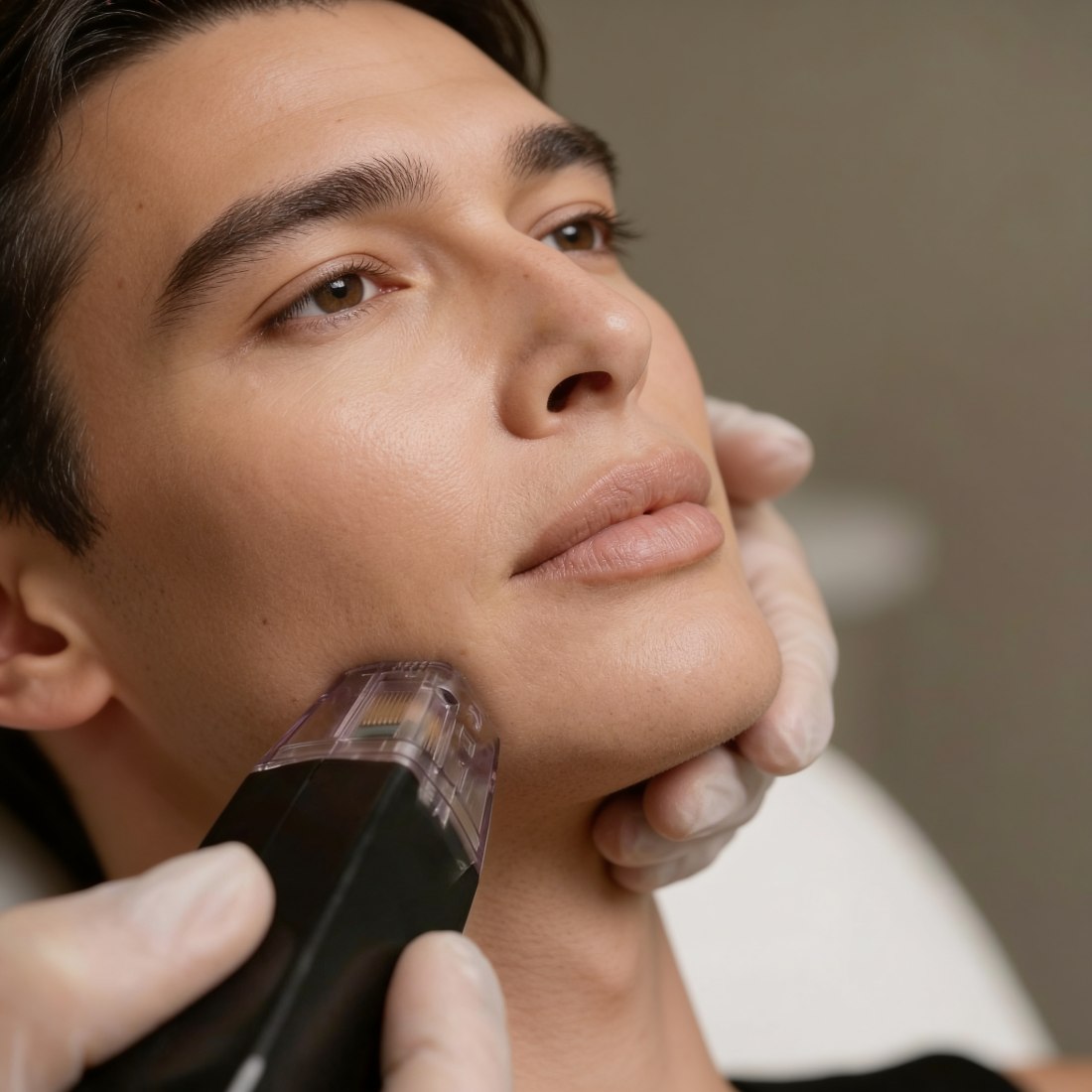
RF microneedling · Morpheus8
RF microneedling: Compare providers from our network
RF microneedling delivers heat through fine needles to firm skin and refine texture. Results build gradually over a short course of sessions.
Our network
RF microneedling providers from Adoreal's partner network.

Saltsjöbaden · Sweden
Victoriakliniken
Morpheus8 for face and body, which the practice can combine with PRP, with a consultation before any booking.
Saltsjöbaden · Sweden
Victoriakliniken
Morpheus8 for face and body, which the practice can combine with PRP, with a consultation before any booking.
Ready to see who performs RF microneedling near you?
Compare ProvidersDecision support
How to choose an RF microneedling provider
Board certification is the starting point. The details below are worth weighing carefully when you're choosing the provider who's right for your goals.
Here's what to look for before you decide:
Ask who performs the treatment and how they were trained.
The FDA advises choosing a licensed provider with specific training and experience in RF microneedling. Depth and energy settings drive both results and risk, so the operator matters as much as the machine.
Ask which device will be used.
The FDA suggests asking this directly. A provider who names the device, and can explain why it suits your skin and the area being treated, is being transparent with you.
Ask whether a new needle tip is used for you.
For microneedling devices, the FDA advises asking whether a new cartridge is used for each patient and each session. Reusing one, even if cleaned, is unsafe.
A good provider tells you where RF microneedling stops.
It suits early to moderate laxity and texture. If your concern is more advanced sagging, a provider who says surgery or a combined plan would serve you better is being straight with you.
Expect honest numbers.
Practices commonly plan one to four sessions spaced weeks apart, with improvement building over months and maintenance afterwards. A plan that says so upfront is one you can budget and plan around.
Before your consultation, prepare this question
“Which device will you use, who will treat me, and what is their training on it?”
Settings and technique drive both results and risk. A provider who names the device and the person behind it is working transparently.
Find a RF Microneedling ProviderAbout the treatment
About RF microneedling
RF microneedling combines microneedling with radiofrequency (RF) energy. Fine needles or pins carry heat into the deeper layers of the skin, prompting it to produce new collagen and elastin. Morpheus8 is the RF microneedling device our partner practices use.
How it works
Ordinary microneedling works through tiny controlled injuries at the surface. RF microneedling adds heat at the needle tips, which reaches further down. Needle depth and energy can be adjusted, so the same device can treat delicate skin around the eyes or thicker skin on the body.
It is used for fine lines, mild to moderate laxity, uneven texture, enlarged pores and acne scars, on the face, neck and body. The change is gradual, because it depends on your skin rebuilding collagen over the following weeks and months.
What to expect from results
Expectations are worth setting carefully, because the change is gradual:
- Improvement builds over roughly 4 to 12 weeks, and can continue for months
- Some people see a difference after one session; practices commonly plan one to four
- It works best on early to moderate laxity, texture, pores, fine lines and acne scars
- Results are long-lasting but not permanent, and periodic maintenance is common
- More advanced sagging may need surgery or a combined plan
What the FDA has flagged
In October 2025 the US Food and Drug Administration (FDA) issued a safety communication about RF microneedling used for skin procedures. It has received reports of serious complications, including burns, scarring, fat loss, disfigurement and nerve damage, some of which needed surgical repair.
The FDA describes RF microneedling as a medical procedure, not a cosmetic treatment, and says these devices should not be used at home. It advises choosing a licensed provider trained and experienced in RF microneedling, and asking which device they plan to use. If something does not feel right after treatment, contact the practice or another licensed clinician.
Before, during and after
Consultation. Your provider assesses your skin and concerns, explains what the treatment can and cannot do, and plans depth, energy and sessions.
Preparation. Share your medications and history of cold sores or keloids, and avoid tanning beforehand.
Treatment. Numbing cream is applied, then the handpiece is passed over the area. Sessions take about 20 to 60 minutes.
Aftercare. Redness, warmth and pinpoint marks for one to three days. Avoid heat, heavy sweating and unprotected sun for 24 to 48 hours.
Course and review. Sessions are spaced four to eight weeks apart, and improvement builds over the following months.
Who it suits
RF microneedling suits many people with early laxity, crepey texture, fine lines or acne scars, but it is a medical procedure and not right for everyone. It is less suitable if you:
- Have an active skin infection or a current cold sore outbreak in the area
- Have taken isotretinoin for acne in the past six months
- Have a bleeding disorder or take blood thinners
- Have a history of keloid scarring
- Are immunosuppressed or have poorly controlled diabetes
- Are tanned, or plan significant sun exposure in the two weeks after treatment
- Have more advanced sagging, which may be better addressed surgically
Risks and side effects
Most side effects are mild and short-lived, but serious complications have been reported:
- Redness, warmth and swelling. Common, usually settling within one to three days.
- Pinpoint marks and crusting. Tiny marks from the needles that close within a day or two.
- Dryness, tightness or peeling. Temporary, as the skin recovers.
- Bruising or pinpoint bleeding. Possible. Tell your provider if you take blood thinners.
- Pigment changes. Darkening or lightening of the skin. Less common, and worth discussing if you have a deeper skin tone.
- Burns, scarring, fat loss or nerve injury. Serious complications reported to the FDA, which can need medical or surgical treatment.
Common questions
RF microneedling questions, answered.
If your question isn't here, ask us directly. A real person answers, and we won't push you toward anything.
Talk to us →How is RF microneedling different from regular microneedling?
Both use fine needles to trigger collagen production. RF microneedling also delivers radiofrequency heat through the needles, reaching deeper layers, which is why it is used for laxity as well as texture.
Is Morpheus8 the same thing as RF microneedling?
Morpheus8 is one RF microneedling device, and the one our partner practices use for this treatment. Ask any provider which device they use.
How many sessions will I need?
It varies by practice and concern. Some people see a difference after one session; plans commonly run from one to four sessions, spaced four to eight weeks apart.
Does it hurt?
Numbing cream is applied first, and most people tolerate it well. Expect warmth and some discomfort during the passes, and tell your provider if it is too much.
What is the downtime?
Usually short: redness, warmth, mild swelling and pinpoint marks for one to three days. Avoid heat, heavy sweating and unprotected sun for 24 to 48 hours.
When will I see results?
Gradually. Improvement builds over roughly 4 to 12 weeks as collagen remodels, and can continue for several months.
How long do results last?
They are long-lasting but not permanent, because the skin continues to age. Practices commonly recommend periodic maintenance, often about once a year.
Can it replace a facelift?
No. It can firm early to moderate laxity, but more advanced sagging is better addressed surgically, sometimes with RF microneedling as part of a combined plan.
Is it suitable for darker skin tones?
Our partner practices say it can treat a range of skin tones when settings are appropriate, because the heat is delivered beneath the surface. The FDA notes a risk of darkening or lightening with microneedling in darker skin, so ask about your provider's experience with your skin type.
Is it safe?
Most side effects are mild and short-lived. The FDA has, however, received reports of serious complications such as burns, scarring, fat loss and nerve damage, and advises choosing a licensed, trained provider and asking which device they use.